Serwis wymaga plików cookies do prawidłowego działania strony. Korzystanie z serwisu bez zmiany ustawień dla plików cookies oznacza, że będą one zapisywane w pamięci urządzenia. Ustawienia te można zmieniać w przeglądarce internetowej.
The best Polish website dedicated to the Greek island Crete and to a small extent of continental Greece. You will find useful information related to visiting Crete that goes beyond the offer of optional tours. On the website you will also find descriptions of the most interesting places that we visited by visiting this largest Greek island. The content complements the current news, photographs and recipes of Greek cuisine.
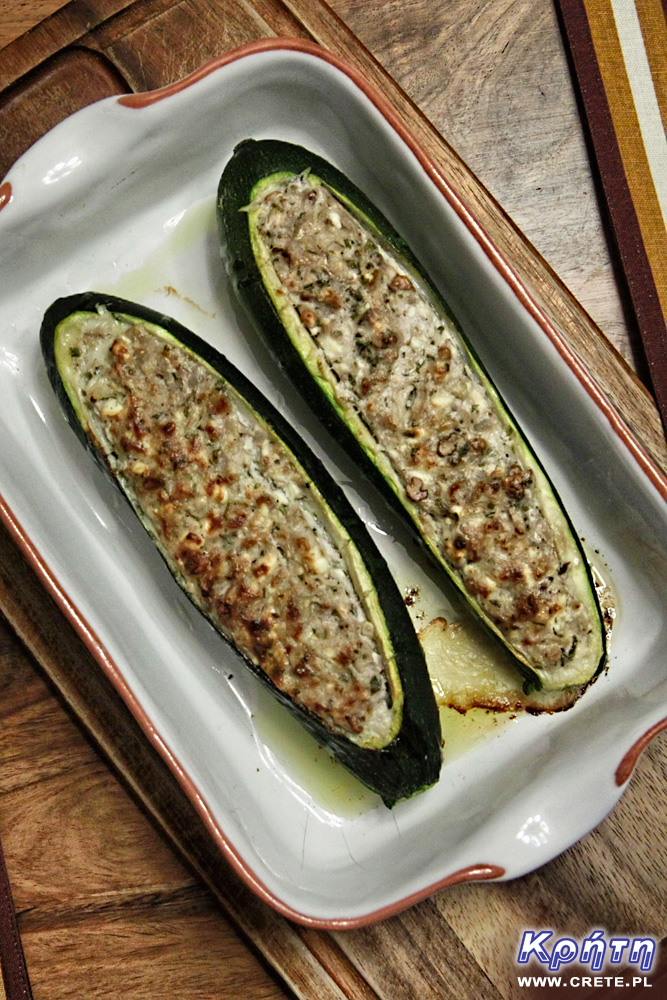
Zucchini in Greek cuisine is very common. It can be found as an ingredient in pits (kolokithopita), chops (kolokithokeftedes), in vegetable casserole briam, in the form fried in pastry (kolokithakia tiganita) or simply cooked or grilled. Another tasty way for this vegetable is to make it in a stuffed form. We chose stuffing without meat, mainly based on feta and walnuts. This is a fairly simple way, and its additional advantage may be that such zucchini can be reheated without problems on the second day. It will be equally tasty or even better!
1. This dish is best served with young and rather small courgettes. Those more overgrown with hard skin will not taste good.
2. The first step is to briefly cook zucchini. We put them all in a pot with boiling water and when the water starts boiling again, boil zucchini for 3 minutes. After removing them from the pot, rinse with cold water and let them cool down.
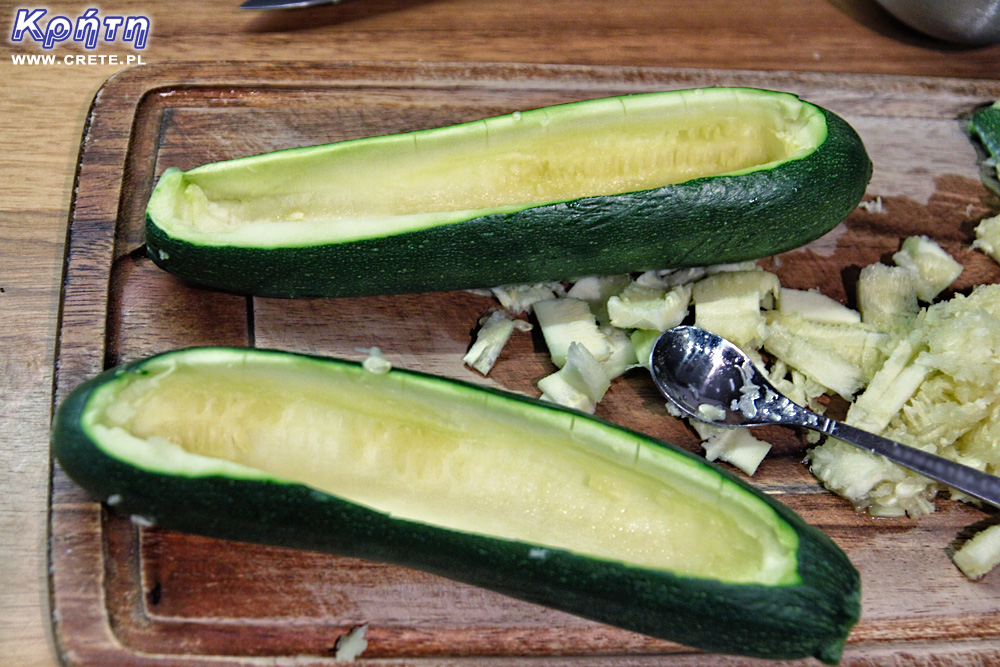
3. When the courgettes cool down on two opposite sides, remove the thin strip. Thanks to this, the courgettes will not tip over and it will be easier to hollow the center.
4. The cavity should be made quite delicately and precisely so as not to cut the skin. The pulp should be densely cut along the edges and selected with a teaspoon. A portion of the flesh (about half) must be added to the stuffing, so it should be finely chopped.
5. Warm up 1-2 tablespoons of olive oil in a frying pan and fry onions and garlic on it until the onion becomes tender. Then add the previously chopped zucchini pulp and fry another 5 minutes.
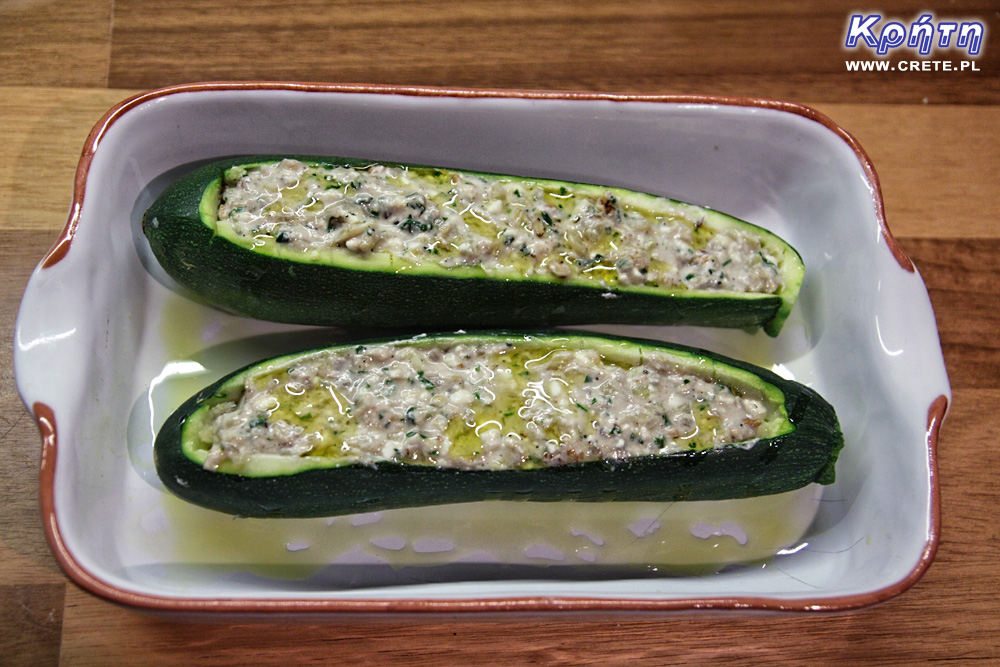
6. We assemble the pan from the oven and leave it to cool slightly. Next, add the crumbled feta, finely crushed nuts, parsley or dill, and a crumbled egg. Stir the stuffing, season with salt and pepper and then fill with courgettes.
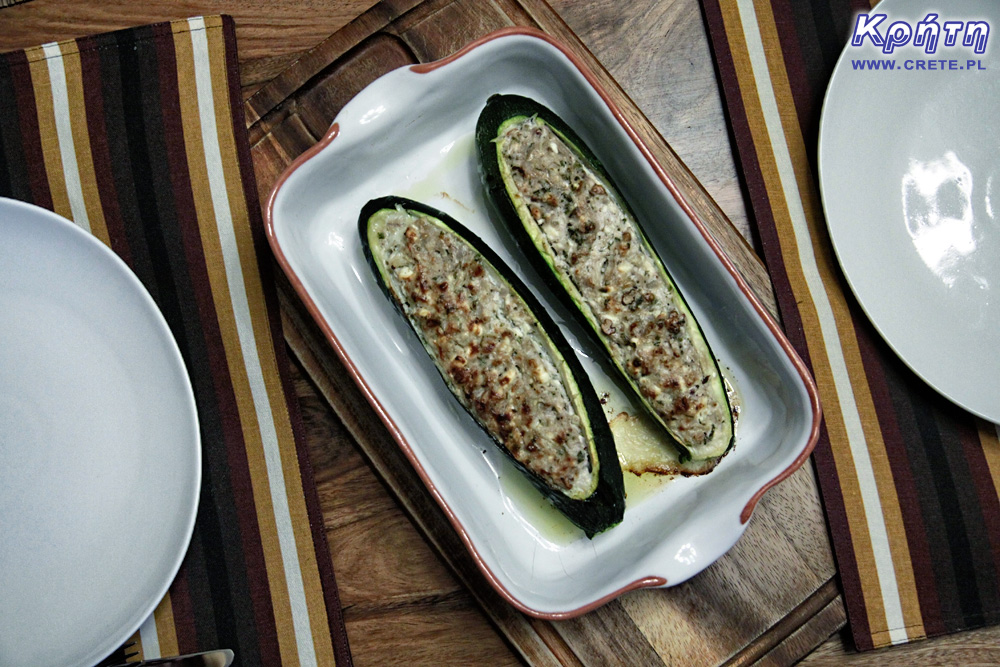
7. Zucchini put in a heat-resistant dish, sprinkle with oil and cover with aluminum foil. Bake in oven preheated to 190 degrees for half an hour, then take off the foil and bake another 10-15 minutes until the stuffing begins to blush.
We serve hot zucchini.
Καλή όρεξη!
Data publikacji:
Data modyfikacji:
Średnia: 5
Liczba ocen: 1
0.5
1.0
1.5
2.0
2.5
3.0
3.5
4.0
4.5
5.0
Oceniłeś na:
Kreta informacje5 na
5 (0)
liczba ocen
1
Wszystkie treści i zdjęcia występujące w serwisie są naszą własnością.
Wykorzystanie ich w dowolnej formie wymaga pisemnej zgody autorów.
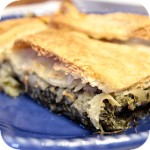
Italian Fennel is a common ingredient in Mediterranean cuisine. In Greek cuisine, its characteristic slightly aniseed flavor can be found, among others, in sensational kaltsouni and pitta casseroles. Today we would like to share with you the recipe for pitto with Italian fennel.
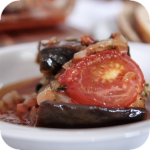
We will not cheat you. Imam Bayildi is not a diet and it should not be like that. A large amount of oil is needed here to produce a delicious sauce, in which the eggplant will almost swim. We also ate such a delicious "floating" Imam in Matala, Crete, and he was the prototype for our recipe.
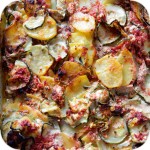
Briam is one of the most famous dishes of Greek cuisine. Depending on the region of Greece, this vegetable casserole consisting of zucchini, potatoes and eggplant has many variants. Even on our site there are two recipes for its preparation. Today we will add another one that definitely surprised us. We ate briam prepared this way in Paleochora in one of our favorite family traditional taverns this year.
gość dodekanezowiec Z pewnością Hiszpania ma większy problem z turystyką - vide: Majorka czy Benidorm (hotele na 50 pięter).
Z drugiej strony - włoska Kalabria się zachowuje tak jak gdyby nie chcieli turystów. Tam jest cisza i spokój, hotele na wygwizdowiu, poza Tropeą i paroma miasteczkami nudy totalne. Na Sycylii niewiele lepiej - jakie tam są miejscowości dla turystów, gdzie nie będzie się on nudził? Też na palcach ręki by policzyć. (...)
gość PiotrWie Jeździliśmy na Kretę od 2008r, bywały lata że byliśmy w kilku kawałkach w sumie czterdzieści kilka dni ( samoloty z Wrocławia latały w piątek wieczorem tak że można było polecieć po pracy, powrotem był w poniedziałek w nocy więc za 11 dni urlopu można było być 17 dni, jak się zaplanowało z jakimś świętem to można było być 2 x 17 dni i raz 10 dni) i z roku na rok było coraz więcej ludzi - nie tylko na plażach ale ... (...)
Czy wyspa jest w stanie pomieścić 15 mln turystów, zapewne tak. Pytanie moje: skąd będzie woda?! Jak już brakuje, tama na Aposelemis sucha, gdzie ścieki popłyną, gdzie będą składowane śmieci??? Smutne, że wyspa zamienia się na globalną destynację.. rozumiem, że pieniądze są ważne ale żeby dewastować naturalne tereny np.triopetra, plakias etc... przykro
Można próbować zrozumieć ludzi, którzy z tego żyją. Można też puścić ludzi na żywioł i nie zajmować się takimi głupotami, jak ofiary śmiertelne. Samaria nie jest szlakiem w 100% bezpiecznym (który szlak jest), to głęboki wąwóz, narażony na erozyjne osunięcia skał. Poza ty, to jest region aktywny sejsmicznie i dość kapryśny pogodowo.
Myślę, że tu nie ma miejsca na ustępstwa. (...)
gość PiotrWie Dziś po raz pierwszy ( a jeździmy dużo od 2008 roku i dużo chodzimy po szlakach) widzieliśmy w Grecji ekipę przygotowującą szlak do sezonu. Nie była to co prawda zbyt duża ekipa - dwie osoby z motyką, sekatorem i niewielką piłą ręczną - ale zawsze coś - na wyspach Kanaryjskich ekipa to pierwszy z kosą spalinową a zanim kilka osób zmiatających resztki na bok. (...)





Komentarze
komentarz z
mniam...wygląda pysznie! :) na pewno wypróbuję, uwielbiam kuchnię grecką
komentarz z
I takie jest! Jak zrobisz to napisz jak wyszło :)
Wypełnij poniższy formularz aby dodać komentarz
lub kliknij w poniższy link aby skorzystać z możliwosci komentowania przez facebooka:
https://www.facebook.com/crete.poland/posts/10153260737447551