Serwis wymaga plików cookies do prawidłowego działania strony. Korzystanie z serwisu bez zmiany ustawień dla plików cookies oznacza, że będą one zapisywane w pamięci urządzenia. Ustawienia te można zmieniać w przeglądarce internetowej.
The best Polish website dedicated to the Greek island Crete and to a small extent of continental Greece. You will find useful information related to visiting Crete that goes beyond the offer of optional tours. On the website you will also find descriptions of the most interesting places that we visited by visiting this largest Greek island. The content complements the current news, photographs and recipes of Greek cuisine.
The holiday season in Greece is in full swing, but alongside traditional holiday-related topics, local media are also reporting warnings about the Lagocephalus sceleratus , known in Greece as lagokefalos and in Poland as the " rabbitfish ." This pufferfish is no longer just a nuisance to local fishermen. This invasive species is drastically changing its behavior, becoming increasingly aggressive, and is becoming a real threat to popular Greek bathing areas.
Although the first official reports of the Lagocephalus in the Aegean Sea date back to 2005-2013, the species' two-decade expansion is slowly reaching a critical point. Until recently, this fish was primarily found in the high seas or around the Dodecanese islands and Crete. Currently, the species has even reached the Athens region, where attacks on people in the water have been reported at popular swimming spots on the Athenian Riviera. What worries ichthyologists most is the change in the Lagocephalos's behavior. These fish have begun to form schools and aggressively search for food in shallow waters, displaying a complete lack of fear of humans.
"Lagocephalus sceleratus" map from ELNAIS (Early Warning System for Alien Species). It shows the progressive expansion of the Lagocephalos - next to each point are the years of the first appearance of the fish in a given area (e.g. 2005, 2006, 2012, 2020)
Encounters with rabbitfish can have dramatic consequences, as this species is equipped with four powerful, sharp, beak-like teeth. Dozens of dangerous bites have been recorded in Attica and on the islands, some of which have resulted in hospitalization. The fish most often attack people's shins and buttocks, and in extreme cases, amputation of fingers and toes has even occurred. Accounts from victims indicate that, in addition to severe bites, these fish attempt to strike swimmers and even chase them.
Greek Red Cross Guidelines. How to provide first aid?
Due to the increasing number of incidents, the Hellenic Red Cross Health Sector has published an official protocol for dealing with Lagocephalus bites. It's important to emphasize that the bite itself is not venomous, but its extremely strong, beak-like jaws can cause serious injuries and profuse bleeding.
In the event of an attack, take the following steps:
Get out of the water immediately and away from the fish. Do not continue swimming under any circumstances.
Wash the wound with plenty of clean, running water and soap. The Greek Red Cross strongly advises against using seawater or applying commercially available antiseptics and ointments without a doctor's advice.
Apply constant pressure to the wound using clean gauze or cloth. If bleeding is profuse, apply firm pressure to the injured area and elevate the injured limb above the level of the heart.
Seek medical attention immediately. Lagocephalos bite wounds are deep and require professional surgical treatment (e.g., stitches) and the administration of antitetanus serum. In the event of serious injury or difficulty stopping the bleeding, immediately call the emergency numbers: 166 (Greek emergency service) or the European emergency number 112.
Do not eat this fish under any circumstances.
What must also be clearly emphasized is the absolute prohibition on consuming these fish. Their internal organs and flesh contain tetrodotoxin (TTX) – a deadly neurotoxin that is not destroyed by high temperatures (cooking, frying) or freezing. Due to the variable distribution of the toxin, no part of the fish is considered safe for consumption. In extreme cases, death by suffocation due to paralysis of the respiratory muscles can occur, even worse, even if the patient is fully conscious. It is also forbidden to touch beached specimens, let alone feed them to pets.
Economic losses of fishermen
This predator's invasion not only results in attacks on bathers and painful wounds, but its appearance in Greek waters directly affects local fishermen. Lagocephalus can tear nets, destroy equipment, and even eat other caught fish. Worse still, this species effectively decimates native marine fauna, preying on shrimp, crabs, octopuses, and cuttlefish.
Areas like the Saronic Gulf, which fishermen ironically called their "ATMs" due to the abundance of valuable and expensive fish (e.g., redfish), are now dominated by schools of harefish. According to estimates by the Hellenic Centre for Marine Research (HCMR), the average annual loss for a single Greek fisherman due to damaged gear and lost catches now exceeds €6,000.
In response, Mediterranean governments are taking drastic financial measures. The Greek government is considering launching a subsidy program of €6 per kilogram of harefish caught (a pilot has already been launched in Crete and the Dodecanese), viewing this as the sole incentive for fishing boat crews to massively reduce the population. Similar programs are in place in Cyprus (where the rate has been increased to €4.8 per kilogram with a target catch of 125 tons) and Turkey. Meanwhile, in Egypt, scientists are investigating the possibility of industrially isolating the toxin itself.
It's worth mentioning the EU research program "Lagomeal," in which scientists from HCMR and the Demokritos Institute are working to develop a technology for safely removing tetrodotoxin from fish. The goal is to process the plague into high-quality and affordable fishmeal for animal feed production.
Human interference has destroyed 3,500 years of stability
Analyzing the causes of the current crisis, experts clearly point to human activity. Anastasia Miliou, Research Director at the Archipelagos Institute of Marine Research, recalled in a media interview that the Aegean Sea ecosystem has maintained relative biological stability for nearly 3,500 years. Our ancestors caught and ate the same exact fish species. The contemporary expansion of alien species is a direct result of the digging (2001) and widening (2015) of the Suez Canal, the uncontrolled discharge of ballast water by commercial vessels, and, above all, overfishing.
It's important to remember that nature has its own regulatory systems. The lagocephalus's natural enemies are large predators such as sharks and swordfish. Caretta caretta sea turtles could also play a role; their current population is so small that the species is considered vulnerable to extinction. Unfortunately, the scientists' conclusions are clear: subsidizing lagocephalus fishing alone will not yield long-term results unless overfishing of the rabbitfish's natural predators is halted. Experts believe the government should also subsidize fishermen to temporarily refrain from fishing. Only by giving the sea time to regenerate can the natural biological barrier, which alone can stop the invasion, be restored.
Dwa lata temu mnie zaatakowały trzy po zejściu z wawozu Chochlakies. Jedna ugryzła mnie w kostke. Byly bardzo agresywne. Otoczyly mnie i szarżowaly
2026-07-05 19:55:32
komentarz z
CRETE - Kreta biedny :(
CRETE - Kreta
2026-07-05 16:01:21
komentarz z
Małgorzata Gębska Obecnie problem bardzo się nasilił. Często są informacje o spotkaniach z tymi rybami. A o tym jak bardzo jest toksyczna niech świadczy informacja z dzisiaj - w Kali Limenes pies zjadł jedną z tych ryb wyrzuconą na brzeg. Po pół godzinie psa już nie było. :(
1
Wypełnij poniższy formularz aby dodać komentarz
lub kliknij w poniższy link aby skorzystać z możliwosci komentowania przez facebooka: https://www.facebook.com/crete.poland/posts/1431786528995607
gość dodekanezowiec Z pewnością Hiszpania ma większy problem z turystyką - vide: Majorka czy Benidorm (hotele na 50 pięter).
Z drugiej strony - włoska Kalabria się zachowuje tak jak gdyby nie chcieli turystów. Tam jest cisza i spokój, hotele na wygwizdowiu, poza Tropeą i paroma miasteczkami nudy totalne. Na Sycylii niewiele lepiej - jakie tam są miejscowości dla turystów, gdzie nie będzie się on nudził? Też na palcach ręki by policzyć. (...)
gość PiotrWie Jeździliśmy na Kretę od 2008r, bywały lata że byliśmy w kilku kawałkach w sumie czterdzieści kilka dni ( samoloty z Wrocławia latały w piątek wieczorem tak że można było polecieć po pracy, powrotem był w poniedziałek w nocy więc za 11 dni urlopu można było być 17 dni, jak się zaplanowało z jakimś świętem to można było być 2 x 17 dni i raz 10 dni) i z roku na rok było coraz więcej ludzi - nie tylko na plażach ale ... (...)
Czy wyspa jest w stanie pomieścić 15 mln turystów, zapewne tak. Pytanie moje: skąd będzie woda?! Jak już brakuje, tama na Aposelemis sucha, gdzie ścieki popłyną, gdzie będą składowane śmieci??? Smutne, że wyspa zamienia się na globalną destynację.. rozumiem, że pieniądze są ważne ale żeby dewastować naturalne tereny np.triopetra, plakias etc... przykro
Można próbować zrozumieć ludzi, którzy z tego żyją. Można też puścić ludzi na żywioł i nie zajmować się takimi głupotami, jak ofiary śmiertelne. Samaria nie jest szlakiem w 100% bezpiecznym (który szlak jest), to głęboki wąwóz, narażony na erozyjne osunięcia skał. Poza ty, to jest region aktywny sejsmicznie i dość kapryśny pogodowo.
Myślę, że tu nie ma miejsca na ustępstwa. (...)



 2026-06-24 20:07:20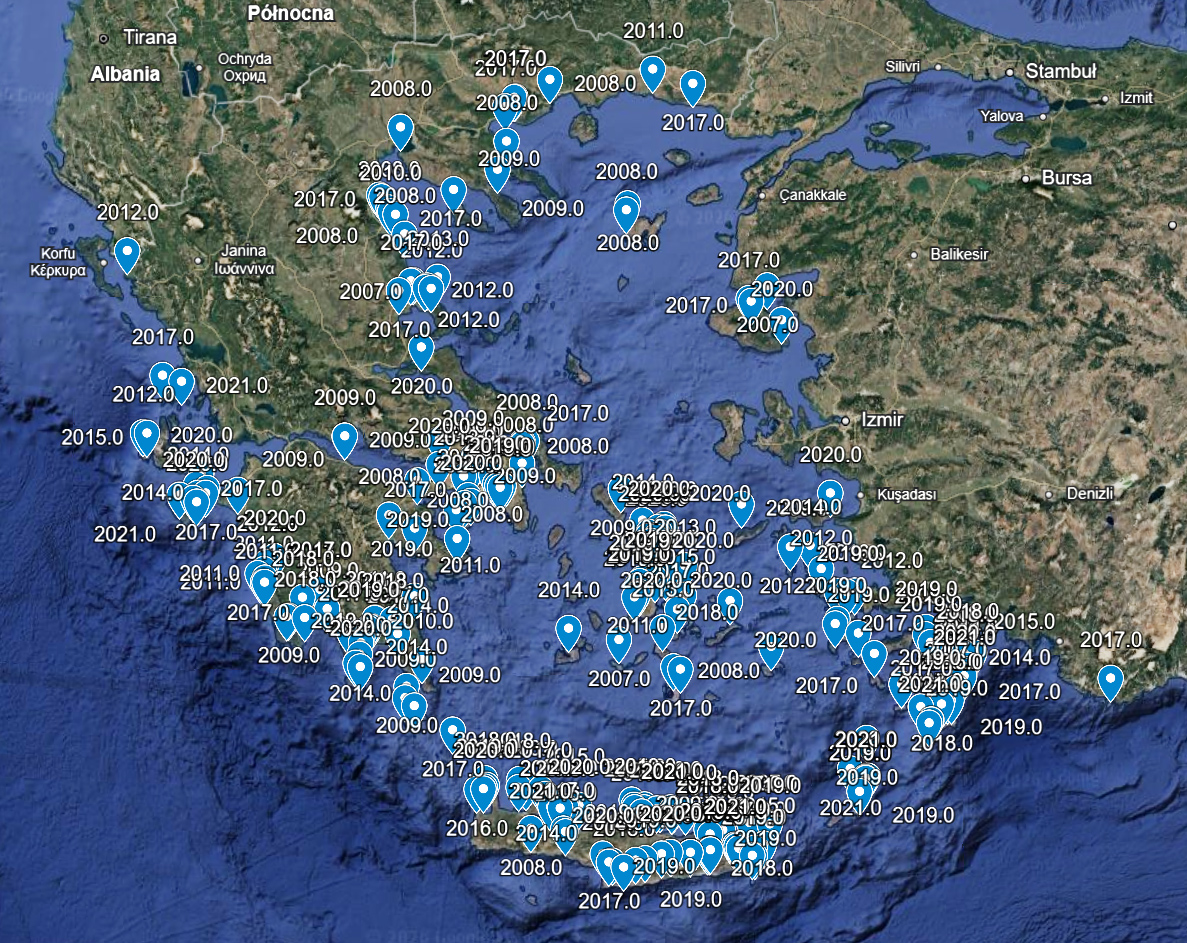

Komentarze
komentarz z
Dwa lata temu mnie zaatakowały trzy po zejściu z wawozu Chochlakies. Jedna ugryzła mnie w kostke. Byly bardzo agresywne. Otoczyly mnie i szarżowaly
komentarz z
CRETE - Kreta biedny :(
komentarz z
Małgorzata Gębska Obecnie problem bardzo się nasilił. Często są informacje o spotkaniach z tymi rybami. A o tym jak bardzo jest toksyczna niech świadczy informacja z dzisiaj - w Kali Limenes pies zjadł jedną z tych ryb wyrzuconą na brzeg. Po pół godzinie psa już nie było. :(
Wypełnij poniższy formularz aby dodać komentarz
lub kliknij w poniższy link aby skorzystać z możliwosci komentowania przez facebooka:
https://www.facebook.com/crete.poland/posts/1431786528995607